We Are Hiring a Couples Counsellor and a Child & Youth Counsellor – Apply by August 30, 2024
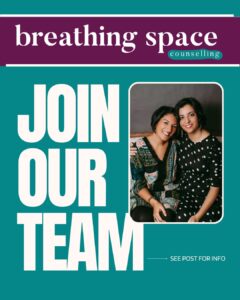 Breathing Space Counselling is a thriving private counselling practice in Port Moody, BC. It was founded in 2016 by two Master Therapeutic Counsellors, Nasreen Gulamhusein & Shahaa Kakar. We offer in-person and online counselling for individuals and couples. We also offer in-person child & youth counselling.
We have built a trusted reputation in our community and due to growing demand, we have expanded and brought on eight Associate Counsellors over the last two years. We are now seeking 1-2 more Associate Counsellors to work alongside us. This is a wonderful opportunity to be mentored by two established counsellors and join an inclusive and heart-centred work culture.
WHAT WE ARE LOOKING FOR:
All applicants must:
- have graduated from a counselling program and have completed your practicum requirements
- have professional liability insurance
- be in good standing with a counselling association, such as the ACCT, CPCA or BCACC
** Specifically for this round of hiring, we are looking for 2 Associate Counsellors:
- a couples counsellor (with appropriate couples counselling training like Gottman, Imago, EFT, etc.) who can also work with adult individuals
– and – - a child & youth counsellor (bonus points if you specialize in neurodiversity and/or you also work with adults).
This opportunity is exclusively for Counsellors who are willing to work in-person in our office space in Port Moody, BC. We are not considering online counsellors at this time.
The successful applicant is available for 10 – 15 hours per week, including some evenings and/or weekends. The exact schedule will be negotiated with the successful candidate(s). However, due to office availability your hours will need to fall into the following days/times: Mondays, Thursdays before 3, Fridays after 2:30, Saturdays, Sundays.
YOU ARE SOMEONE WHO WILL:
- Be Transparent – be authentic, honest, and real… even when it’s difficult
- Be Kind – speak and act with thoughtfulness and consideration
- Be Human – drop perfection, allow for mistakes, fall down and get back up
- Be Hungry – have a desire to lean in and work with us to build a thriving practice
- Honour Your Commitments – say what you mean and do what you promise
- Bring Your Magic – get creative, share your ideas, inspire and be inspired
YOU HAVE THE FOLLOWING:
- A recognized counselling qualification (diploma or masters degree).
- Completed all practicum requirements.
- Are a current BC/Canadian Registered Counsellor in good standing (all designations will be considered).
- Hold current Professional Liability Insurance.
- Have a Registered Supervisor and are receiving regular supervision.
- Are committed to undertaking continuous professional development.
- Uphold the highest professional, ethical and professional standards in your practice and consistently adhere to your counselling association’s code of ethics.
- Are able to commit a minimum of 10 – 15 hours per week for clients to consistently book in with you. This could include a mix of daytime, evening and weekend hours (specific days and times are negotiable). Some evening and/or weekend availability is required as these are high demand times for clients.
- An awareness of (or, a willingness to learn about) privilege and marginalization and how these might impact your lens/bias while you are counselling.
- A willingness to engage in continual learning and dialogue towards creating a safe, inclusive and diverse culture within our practice (both with clients and with each other).
WE OFFER THE FOLLOWING:
- Flexible and negotiable working hours.
- A competitive Associate Counsellor package/fee split, with incentives to grow.
- Targeted marketing and client recruitment on your behalf.
- Ongoing support and mentoring, as needed.
- Simple and easy to use online scheduling software.
- Standard forms, filing system, and client receipting is provided.
- A bright and inviting counselling centre in the heart of Port Moody, which includes three counselling offices, a multi-purpose main space/waiting room and kitchenette facilities (close to SkyTrain and street parking).
- A team culture that values connection, celebrating the little things, and getting through the tough moments together.
TO APPLY – Please send the following to [email protected]:
- An updated resume and cover letter detailing why you believe you would be a good fit for our team and what you have to offer. Please be specific about your experience with couples and/or children & teens.
- Two professional references (eg – from a Registered Supervisor, Counselling Teacher or Employer). Written references are preferred.
The successful applicants will also be required to provide: - A copy of your active counselling registration from your relevant association.
- A copy of your active Professional Insurance certificate/policy.
Deadline for applications is Friday August 30, 2024 at 11:59pm.
 In our Western society, grief is highly misunderstood — partly because we have assumptions about what it should look like. Some common misconceptions about grief are:
 If you are looking for support with your grief, we invite you to
 On Saturday, members of our Breathing Space Counselling team attended a child-led March in Vancouver, held in support of a free Palestine.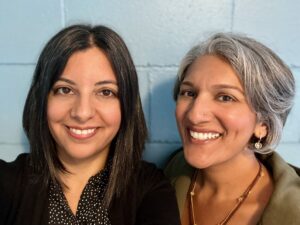

 By Nasreen Gulamhusein
 By Nasreen Gulamhusein
 By Shahaa Kakar & Nasreen Gulamhusein
 By Shahaa Kakar & Nasreen Gulamhusein